

About the museum
HOW IT ALL BEGAN...

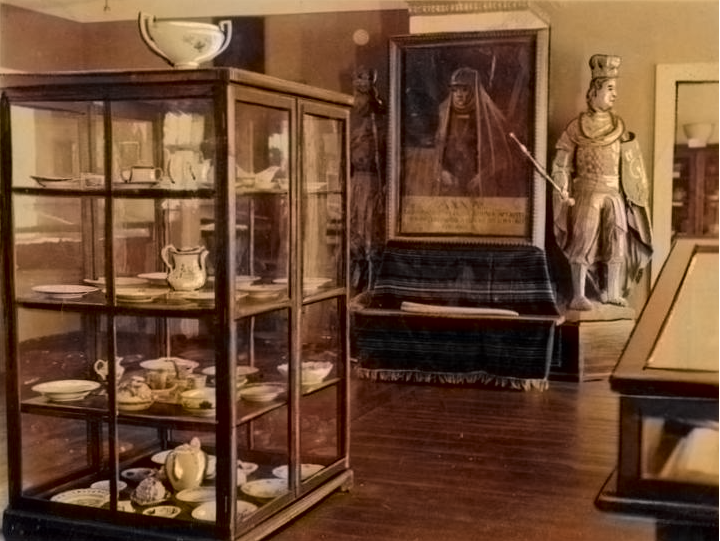
Photo of the exposition of the Volyn Museum in Lutsk during the interwar period (source: Narodowe Archiwum Cyfrowe)
In 1927, Volyn society for local history and protection of monuments of the past was established in Lutsk. It was involved in collecting objects for the future Volyn museum. In September 1928, the society organized an agricultural and industrial exhibition in Lutsk. It presented the folk crafts products of Volyn and Polissia, as well as antiques. According to official data, 62 craftsmen took part in the exhibition and presented handworks of weaving, embroidery, woodworking, wickerwork, blacksmithing, etc. The first ethnographic exhibition witnessed high artistic performance and originality of the local people. Some of the exhibited items were purchased for the future museum.
Thanks to the activities of the society, the Volyn regional museum was opened in Lutsk on 16 June 1929. The Polish president Ignacy Mościcki participated in the opening ceremony. The newspapers wrote on the occasion of the launch: “The Volyn museum is strictly regional in its content and assigned not only to collect various objects of past, but also to disseminate knowledge, instill love of culture and art, to explore the terrains of Volyn, its nature, relics, ethnography”. The museum was consecrated on June 28, 1929.
Many well-known historians and naturalists were among the founders of the Volyn museum. They are: Yakub Hoffman - public figure, historian and teacher (1896–1964); Adam Wojnicz - physician (1864–1955); Zbigniew Rewski - art historian and restorer (1905–1989); Jan Józef Fitzke -archaeologist (1909–1940); Kazimierz Przemyski - palaeontologist and academic (1882–1941); Julian Nech - historian and librarian (1908–1939); Oleksandr Prusevych - ethnographer and museologist (1879–1944). The latter made the first director of the new museum. The botanist Stefan Matsko (1899–1967), the art critic Jozef Dutkiewicz (1903–1968), the historian Anatolii Dublianskyi (1912–1997), and the archaeologist Zygmunt Leski (1896–1965) played a significant role in the establishment and development of the museum.

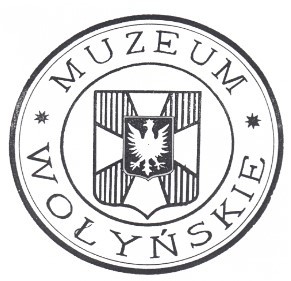
The first seal of the museum.
The first museum exhibition was deployed in the premises No 91 in the lane near Jagiellon Street. In 1933 four rooms were rented in a building on 31 Sienkiewicz Street. Still, the Society planned to build a separate building for the museum.

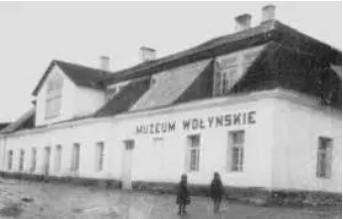
One of the first premises of the museum.
Since 1935, the Volyn museum was managed by the newly created Volyn Society of Friends of Science. At that time, the museum took a leading place among scientific, cultural and educational institutions in Poland. According to the “Report on the activities of the Volyn Society of Friends of Science during 1935-1937” the museum had 4,375 artifacts exhibited in the following departments: natural (entomological collection, rich herbarium of Volyn flora, geological minerals); archaeological (relics from the Neolithic to the Early Slavic period); historical and artistic (collection of tiles of the 14th–19th centuries, samples of Volyn porcelain, coin hoards, paintings); ethnographic which presented the diversity of the material culture of the region. In 1938, there were 9,000 exhibits in four departments - nature, prehistoric past, art, and ethnography.
The main functions of the museum were to collect and care for items of the region's historical, cultural, and natural heritage, as well as to promote the museum collections. The Volyn museum in Lutsk made one of prominent cultural centres in Western Ukraine and Poland.
After Volyn as a part of Western Ukraine made a region of the Soviet Union in September 1939, the museum turned in the Volyn local lore museum. According to the Resolution of the Council of People's Commissars of the Ukrainian Soviet Socialist Republic of May 8, 1940 “On the organisation of state museums and Libraries in the western regions of Ukraine” the Volyn Regional Regional History Museum was set up in Lutsk in 1940. It comprised local lore, historical, ethnographic and archaeological departments. They were deployed in the premises of the former Volyn museum.
At that time, the museum possessions were replenished with works of art, old time items from nationalized manorial estates. The museum received a collection of paintings and antiques from the Olyka Castle that earlier was the principal seat of the Radziwiłł princely family. In 1940, archaeological expeditions were organised in Berestechko and Peremyl, where the historian A. Dublianskyi and the archaeologist Z. Leskyi excavated Old Rus’ settlements. At early June 1941, the museum received unique exhibits - Lesia Ukrainka's autographs, four letters from the poetess, a notebook with folklore records made by Lesia Ukrainka and her sister Olha in Volyn, and the Kosach’s family photos.
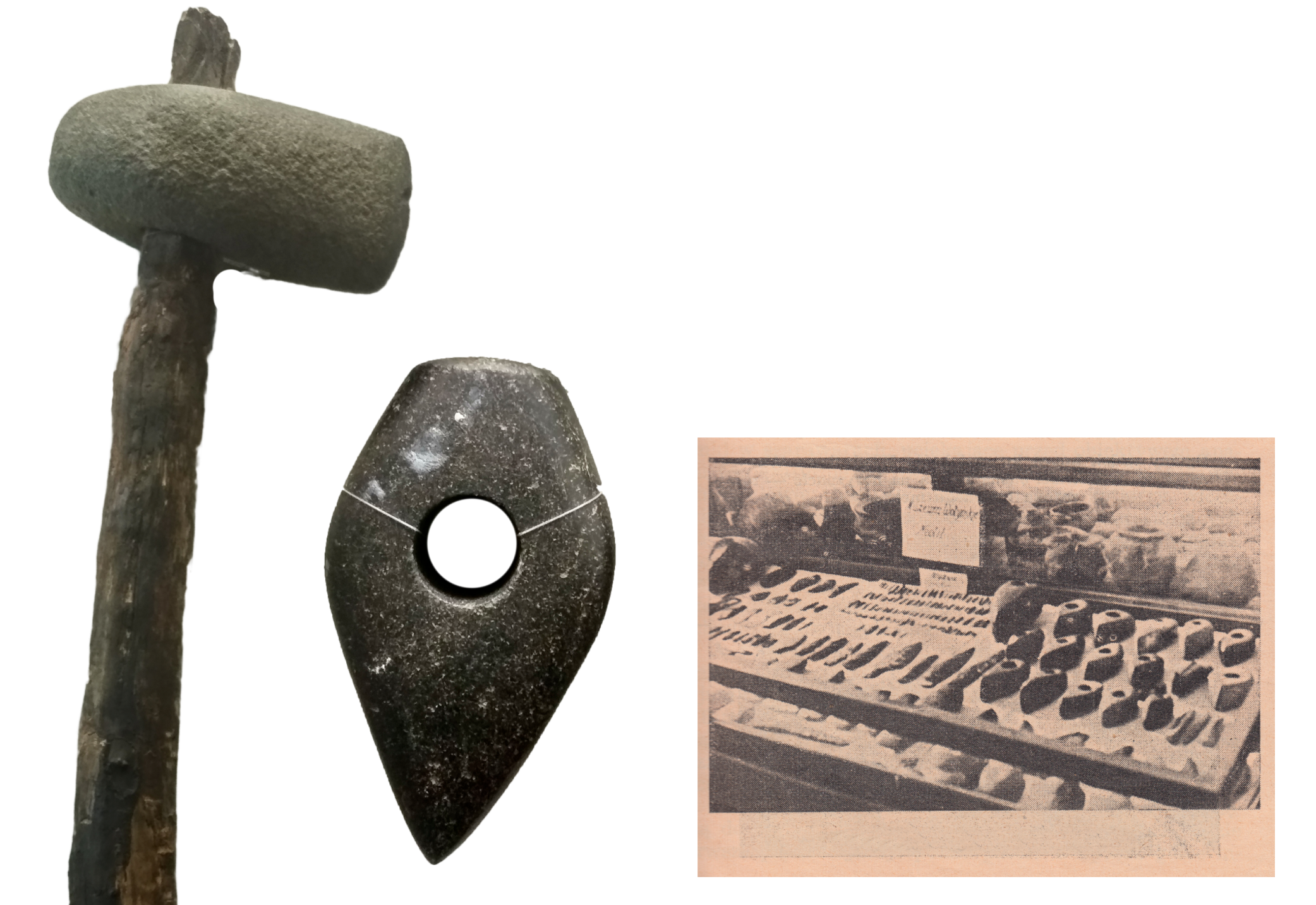
Stone drilled ground axes of the Neolithic period from the excavations of Y.Fitzke.
During World War II, the museum collections suffered significant losses. In the first days of the war, thanks to the staff efforts the museum avoided mass robbery of the exhibits and the library. On November 2, 1941, the museum was opened for visitors again. During the retreat of the Nazi invaders many of artifacts were looted. However, on 17 June 1944, the museum resumed its work as the Volyn State History and Local Lore Museum. In the 50s of the XX century, it received a new name - Volyn Regional History Museum . It was that time when Tetiana Andreieva (1928-2005) and Rimma Kashevska (1930-2011) had been working at the museum. They devoted more than forty years of their lives to advance the museum by creating new collections and exhibitions.
After changing several premises, the Volyn Regional History Museum moved to a three-story building with columns on 20 Chopin Street. It was built in 1928-1930s and designed by the local architect Kazymir Yanitskyi as a seat of Volyn district land administration. On 17 August 1985, a new exposition of the Volyn Regional History Museum was opened.
Over last 90 years the Volyn Regional History Museum has turned into research, scientific, educational, methodical and coordination centre of the Volyn oblast, the major museum with a great number of departments and divisions. In 1949 in the village Kolodiazhne of Kovel raion a devastated manor of the Kosach family was rebuilt. A museum of Lesia Ukrainka was established which made a division of the Volyn Regional History Museum in 1963. In 2004 its subdivision was set up - a “Forest Song” museum in the settlement Nechymne. The collection of paintings and graphics has been exhibited in the Art Museum on the territory of the Lutsk Castle since 1973. In 1993 the Museum of the Volyn Icon was opened in Lutsk. In 2011 the Memorial Museum of Viacheslav Lypynskyi in the village of Zaturtsi of the Volodymyr raion and the Museum of the History of the Lutsk Brotherhood in Lutsk made departments of the regional museum. The Museum of Ethnography and Folk Crafts of Volyn is being created in Lutsk. A restoration workshop has been operating at the museum since 1993.
At present the Volyn Regional History Museum has about 170,000 exhibits which present the nature, archaeology, history, ethnography, and art of the Volyn oblast. The museum has rich collections of natural and scientific materials, geological minerals, flora and fauna. The history of Volyn from ancient times to the present day is represented by unique archaeological and numismatic collections, ethnographic materials, written documents, samples of sacred art (icon painting, wood and copperplate engraving, metalwork, blacksmithing, sewing).
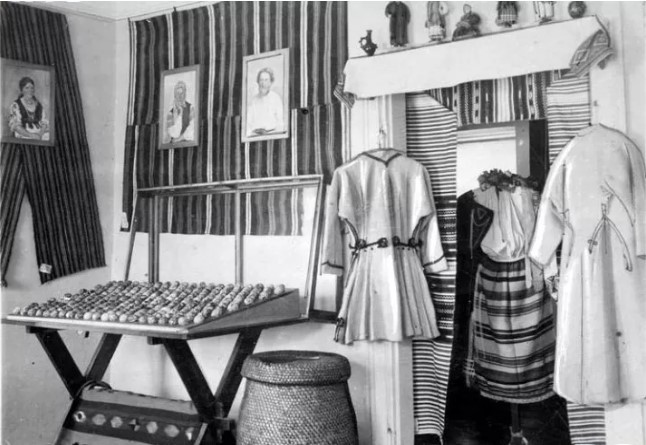
Photo of the ethnographic exposition of the Volyn Museum in Lutsk during the interwar period (source: Narodowe Archiwum Cyfrowe)
The museum has a large collection of applied art: weaving and embroidery, samples of the Volyn folk costume. In recent years, the museum has created personal collections of prominent history and culture figures of the Volyn oblast: Metropolitans of the Ukrainian Autocephalous Orthodox Church Anatolyi Dublianskyi and Polikarp Sikorskyi; historian and political scientist Viacheslav Lypynskyi; military artist of Ukrainian Insurgent Army Nil Khasevych and others.
The museum collections are presented in the sections on nature, ancient and modern history, and thematic exhibitions. The exposition of the museum covers an area exceeding 2,000,000 square metres in 23 stationary and 9 exhibition halls. It is built according to thematic (nature department) and thematic and chronological principles (history department).
The nature department occupies 8 halls and demonstrates nature of the Volyn oblast, its geological structure, climate, rivers and lakes, rich flora and fauna. The department of ancient, medieval and modern history covers the period from the earliest times to 1917. The ethnographic exhibition “Spiritual Culture of Volyn” presents folk and applied art of Volyn - weaving and embroidery; samples of the Volyn traditional costume; straw, roots and vines weaving; wood carvings; pottery; Easter eggs. It introduces to traditions and rituals of the Volyn people, their musical art. The department of recent history deploys the exhibits: “Volyn in 1939-1941”, “Nazi Germany Attacks the USSR”, “Resistance Movement in Volyn (1941-1944)”, “Expulsion of Nazi Invaders from Volyn”, “Shevchenko's Sanctuary of Mykola Kudelia”.
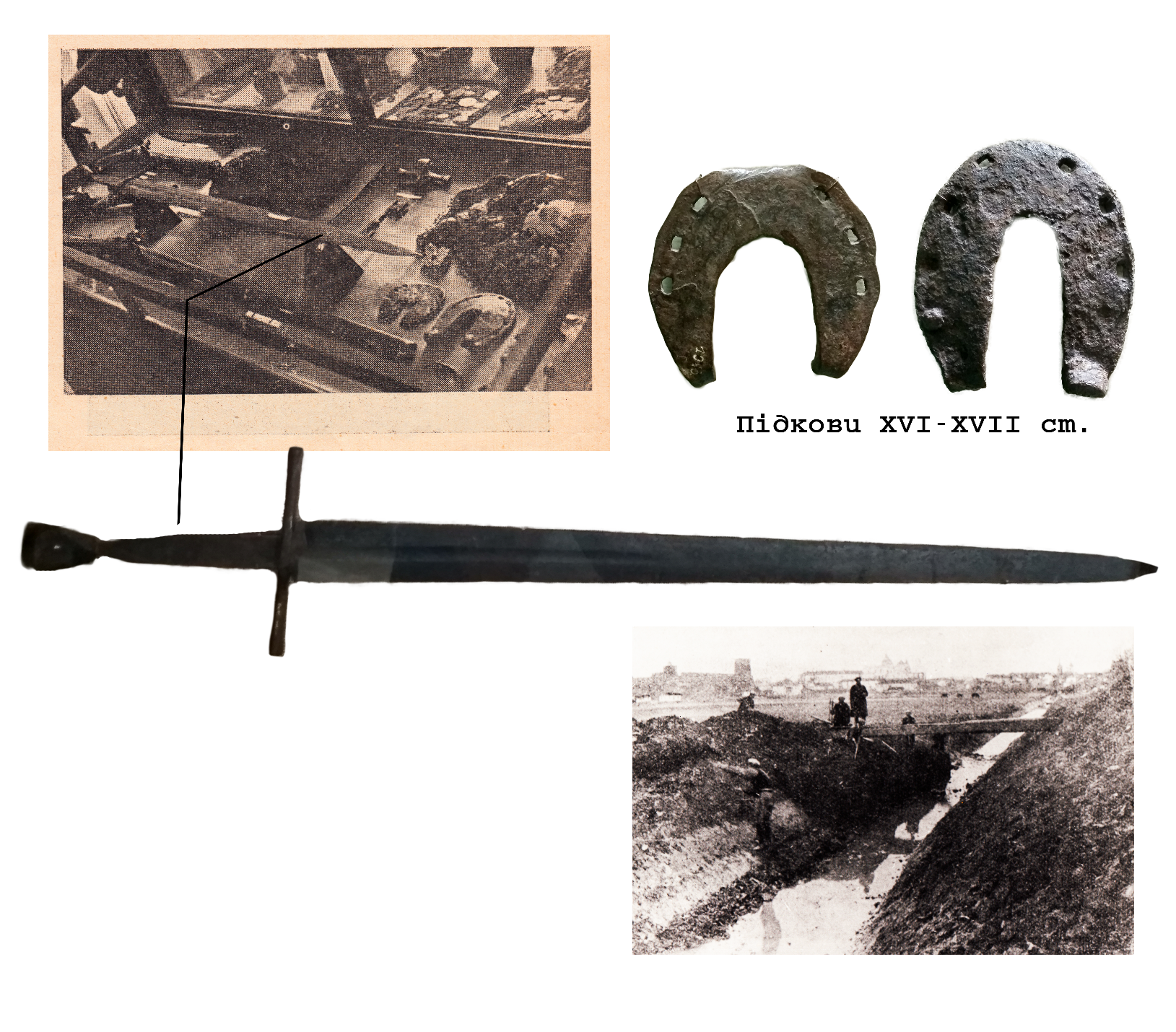
Horseshoes of the XVI–XVII centuries. A one-and-a-half-handed sword, XIV-XV century, was discovered in 1934 in the course of the Hlushets River during land reclamation works and transferred to the museum.
More than 100,000 people visit the Volyn Regional History Museum every year. They can enjoy about seven dozen different exhibitions which are formed both from their own collections and also from other institutions. Thanks to the efforts of scientists, its collections are not only multiplied but also contribute in promoting Ukrainian culture and science.
The scientists of the Volyn Regional History Museum do much research which result in numerous scientific conferences, stationary and mobile exhibitions, scientific and educational events, scientific publications. The museum hosts a number of scientific conferences on Volyn iconography, ethnography and history of museology in Volyn. The museum provides scientific and methodical support to other museums in the region.
The museum participates in international museum projects, cooperates with the museums of Zamość, Chelm, Lublin, Warsaw, Stalowa Wola (Republic of Poland), Vilnius (Lithuania), Minsk (Belarus), and with the Ukrainian diaspora in Canada, the USA, UK, France, Germany.